Thursday, September 3, 2009

Michelangelo's Pietà


La Pietà by Michelangelo is one of history's most famous sculptures. The statue was completed in 1499 and depicts Jesus and the Virgin Mary, the latter represented in a very youthful and peaceful state, as a commission for the French cardinal Jean de Billheres.

The piece was originally placed in the Chapel of Santa Petronilla at Saint Peter's in Rome; however, it was moved several times throughout the years to accomodate renovations, causing substantial damage to Mary's fingers. In a highly infamous move in 1972, a geologist attacked the sculpture with a hammer, after which La Pietà had to undergo major restoration.

The piece now resides inside a bullet-proof box, once again at Saint Peter's.

Wednesday, August 26, 2009

Holbein's Dance of Death Alphabet

Last week I posted about Hans Holbein the Younger's Dance of Death. I feel like I left out a significant, and much acclaimed, section of the work - the Alphabet. Each letter measures only 2.5 x 2.5 cm, but is so full of detail that is even difficult to see in an enlargement. Below is a random sampling of some of the letters...


Tuesday, August 18, 2009

Dance of Death


Perhaps Hans Holbein the Younger's most well-known work of art is the Dance of Death. The group of 41 woodcuts was created in 1526, and published over a decade later. The chilling macabre images were revolutionary at the time - depicting death as an ever-present figure, intertwined with daily life.
I. The Creation

XXVI. The Physician

XXXV. The New-Married Lady


Monday, August 10, 2009

Giacometti


I have always been a major admirer of the work of Alberto Giacometti. His elongated, brittle forms are beautifully haunting and always conjure up images of post-war thoughts of loss and desperation, for me. The Swiss artist currently is the subject of a major show at the Beyeler Foundation in Basel.


Henri Cartier-Bresson - photograph of Giacometti, 1961

Three Men Walking II, 1949, bronze


Dog, 1951, cast 1957, bronze


Tuesday, August 4, 2009

James Ensor at the MoMA

Skeletons Fighting Over a Pickled Herring, 1891 - image via the Museum of Modern Art, New York

Among all of the really great current shows at the Museum of Modern Art in New York, the James Ensor exhibition is one of my favorites. The show features 120 works "examining Ensor's contribution to modernity, his innovative and allegorical use of light, his prominent use of satire, his deep interest in carnival and performance, and his own self-fashioning and use of masking, travesty, and role-playing".

I have always loved Ensor's work, and this is the first time I got to see such a large collection of the haunting, yet comedic images. As Jerry Saltz says in his review of the show, Ensor "let his freak flag fly."

Wednesday, July 29, 2009

El Greco


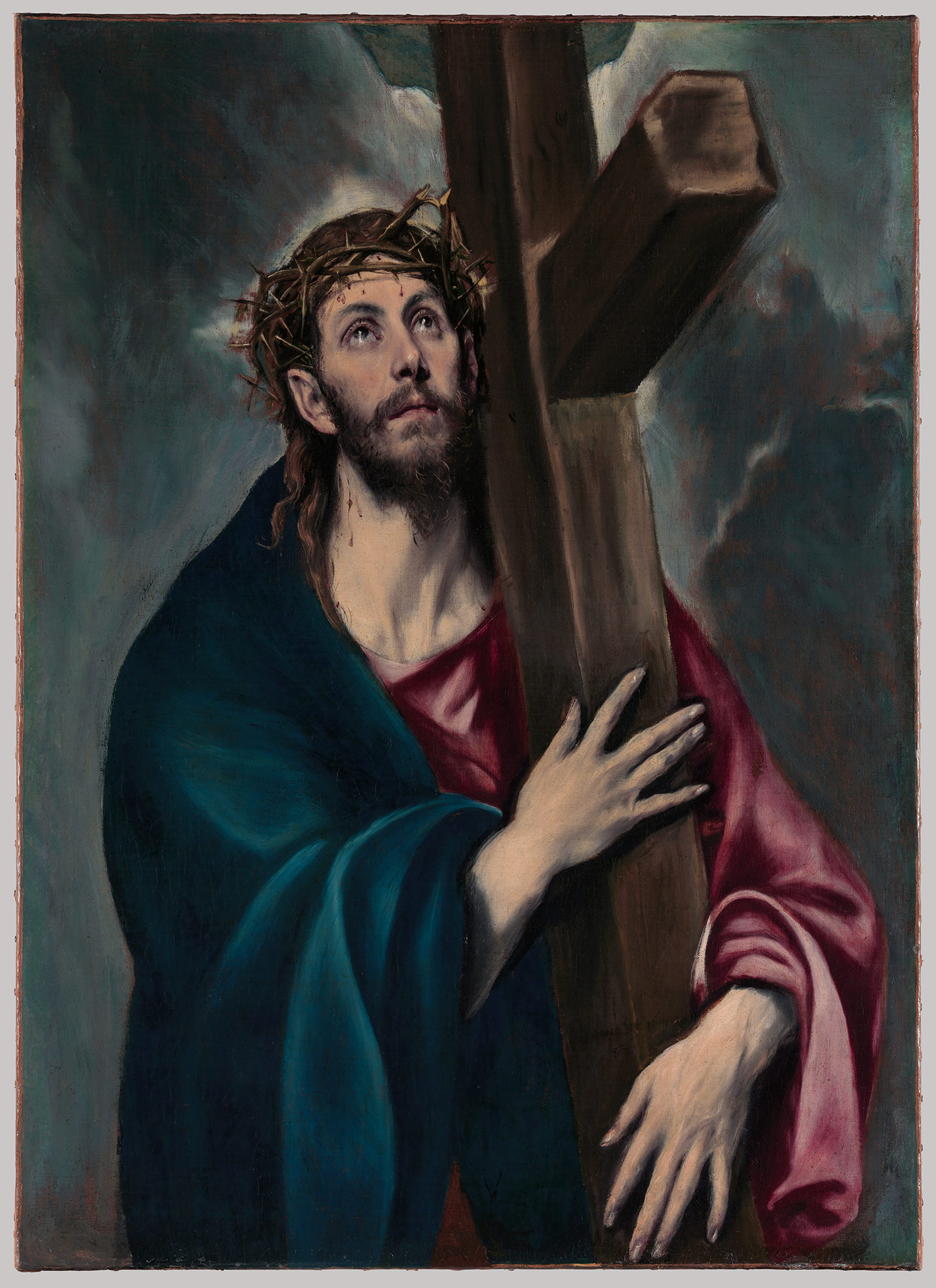
El Greco, one of history's most talented artists (and one of my personal favorites) was born in 1541. His expressionistic, slightly disturbing style and elongated forms - just look at those fingers - brought confusion to his contemporaries, but have become heralded today.


Christ Carrying the Cross, ca. 1580s (?), oil on canvas


Portrait of a Cardinal, 1600, oil on canvas


Paul, the Apostle, 1606, oil on canvas


Friday, July 24, 2009

The Ugly Dutchess


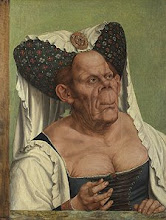
This image of The Ugly Dutchess has become a sort of icon of gross humor and symbol of absurdity, but the truth may not be so funny...


"She is one of the most popular paintings in the National Gallery, whose rather unfortunate looks inspired illustrations for Lewis Carroll's Alice's Adventures in Wonderland. But one question has always puzzled: did the poor lady really look like this?

Today the Guardian can reveal that she did and was suffering from an exceptionally rare form of Paget's disease - an abnormality of the metabolism that enlarges and deforms the bones.

The portrait, An Old Woman, painted by the Flemish artist Quinten Massys in 1513, is popularly known as The Ugly Duchess and will be part of the National Gallery's eagerly awaited exhibition Renaissance Faces: Van Eyck to Titian, which opens next Wednesday.

Curators are particularly excited about this painting because two important discoveries have been made in recent research: firstly, the portrait is truthful and she almost certainly looked like that, and secondly, a long held historical theory that the painter was copying Leonardo da Vinci is wrong.

The medical research shows that she was suffering from an advanced form of Paget's disease - osteitis deformans - which enlarged her jaw bones, extended her upper lip and pushed up her nose. It also affected her...."